

Home | Framework | Understand The Numbers | Denominator Neglect | Don’t just count the incidents
Share:
Denominator Neglect

Don’t just count the incidents

“Titan submarine is safer than flying in a helicopter,” boasted the submarine’s creator short before it tragically imploded. But did he consider how many people choose each adventure?

Photo by Michal Mrozek on Unsplash. Unsplash licence. 

In 2023, the submarine ‘Titan’ imploded in the ocean killing everyone on board.

The CEO of the company, who lost his life in the incident, had claimed that the Titan was “way safer than flying in a helicopter or even scuba diving” because “there hasn’t even been an injury in 35 years in a non-military submarine.”
Yet, he missed a crucial point: a significantly larger number of people use helicopters and partake in scuba diving every day. He focused solely on the numerators while neglecting the denominators.
The number of incidents may not be enough information, we need to know how many people are exposed to each situation.

Denominator neglect

Occurs when we focus on the number of events that have occurred (the numerator) without considering the total number of opportunities for those events to occur (the denominator). This cognitive bias can lead to errors in decision-making, either unintentionally or as a result of intentional manipulation.

Useful Resources:

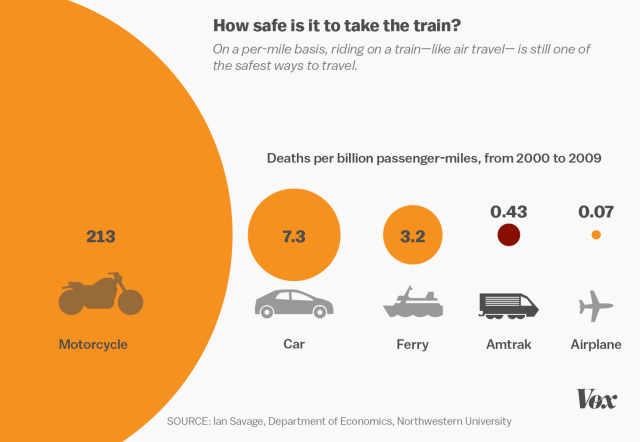
This infographic presents the number of accidents occurring in different transports, from motocycle to airplane, stating the denominator: per billion passenger-miles doem 2000 – 2009. Produced by Ian Savage, Department of Economics, Northwestern University.

These options may help you use our website more easily. For more information please check our accessibility statement.

  • Large text
  • Low contrast
  • Dark mode
  • Reduced motion