Communication Tools
Photo by Wonderlane on Unsplash. Unsplash Licence.

Risk skills and training
As well as leveraging existing resources to our platform, Risk Know-How has supported communities around the world create risk communication resources, kits and tools using the Risk Know-How framework.
From toolbox talks for construction sites to eight points for effective flood risk communication, our resource bank contains over 100 resources in 4 languages that have been used in 165 countries.
Featured resources
See some of the resources created during the initiative
Beyond average temperatures
Beyond average temperatures
Risks posed by climate change are some of the most pervasive facing communities internationally. However, much of the information available fails to give communities what they need.
View Resource
Toolbox talks for construction safety
Toolbox talks for construction safety
Risk Know-How has collaborated with Safetyknot, a UK-based training organisation that provides accessible, culturally appropriate safety and first-aid support, to produce ‘Toolbox talks: how to understand risks on building sites‘.
View Resource
Agua para el Ambiente
Agua para el Ambiente
Members of the initiative Risk know-how from Sense about Science in the UK collaborated with Agua para el Ambiente to identify statistical concepts that could help the community navigate information and respond to local authorities.
View Resource
Eight points for effective flood risk communication
Eight points for effective flood risk communication
We identified the kinds of information people said they needed but didn’t receive, and common misunderstandings about flood risk.
View Resource
Resource Bank
Improving information at the source
Many official and unofficial bodies provide safety information and alerts to communities.
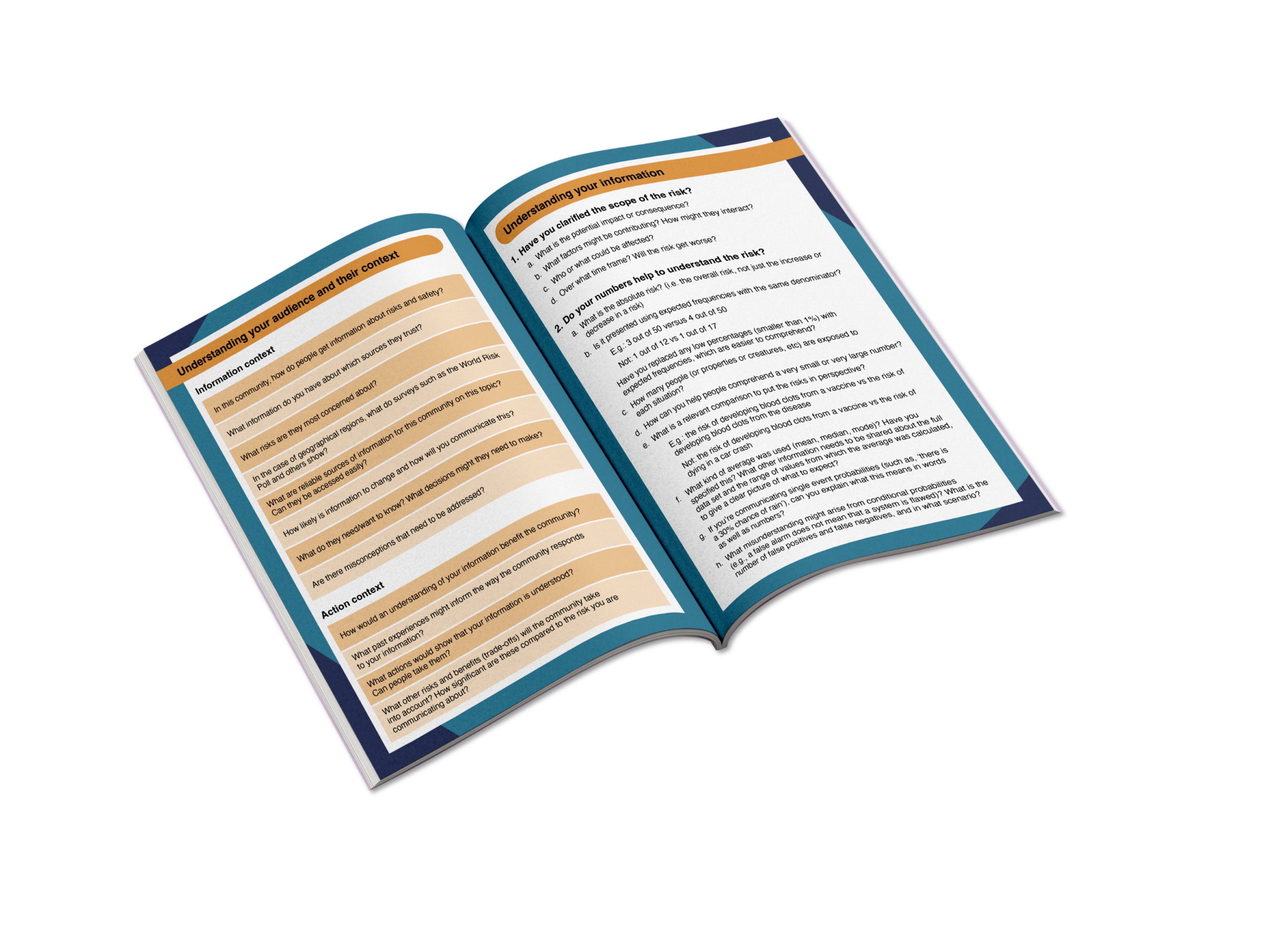
The Risk Know-How framework is now available as a short workbook for information provider to check their communications and maximise their impact.
Aimed at risk information providers to support them in communicating with a given audience and consider their needs, the workbook highlights some best practices to keep in mind when communicating risk.
- Over-simplification does not help because the situations people face are complex.
- Support communities to weigh up risks, assess trade-offs and keep themselves safer.
Our Partners