Agua para el ambiente
Members of the initiative Risk know-how from Sense about Science in the UK collaborated with Agua para el Ambiente to identify statistical concepts that could help the community navigate information and respond to local authorities.
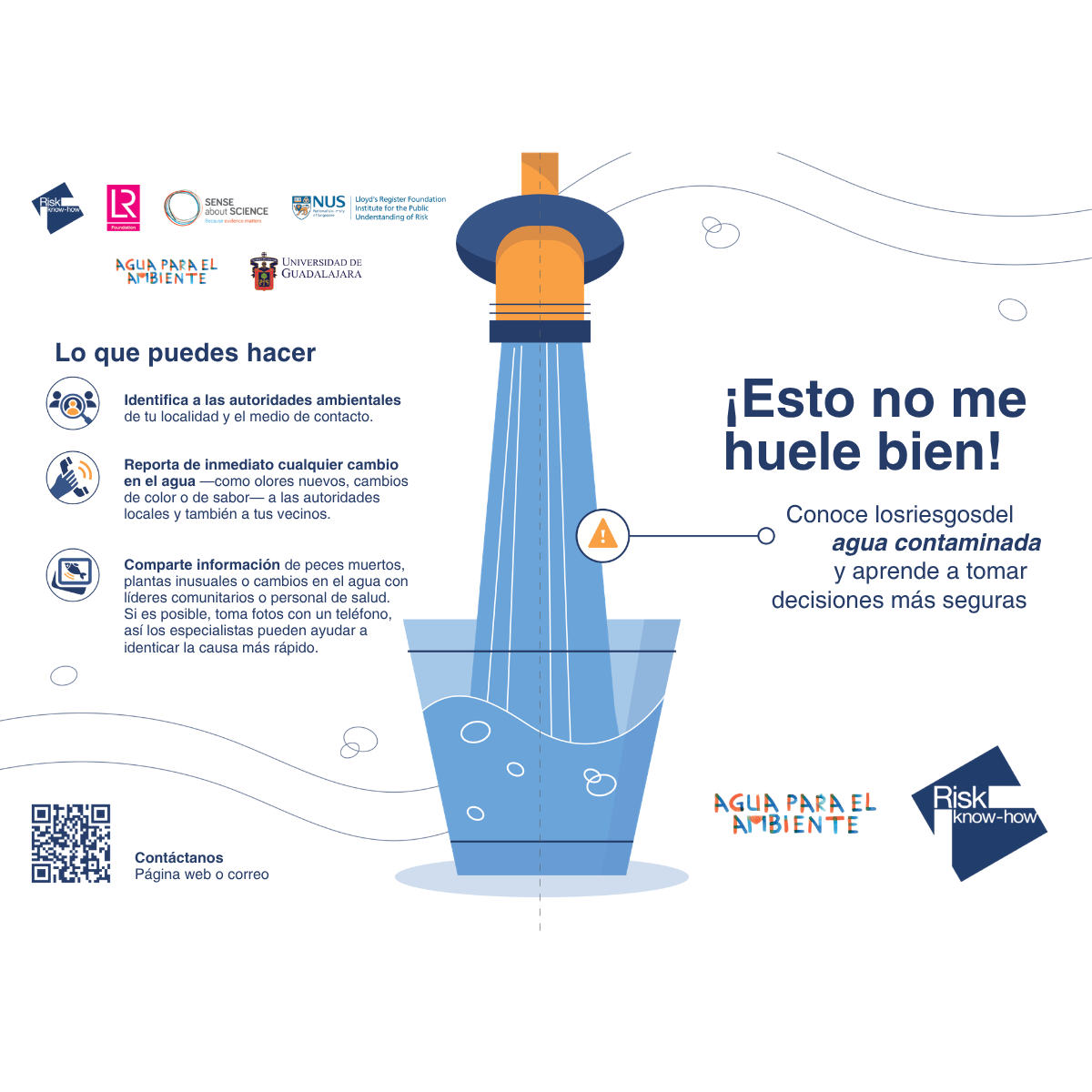
First, they designed an infographic that sets a foundation for “what you need to consider when talking about water risks”. The material reflects relevant concepts and communication strategies from the Risk know-how framework, such as “what are the consequences?”, “who may be affected?” and questioning the meaning of ‘high’ or ‘low’ risk; combined with guidance to evaluate water quality through the senses and concentration limits for key contaminants.
More Like This
View All ResourcesStatistics for Journalists course
The ‘Statistics for Journalists’ course by the Royal Statistical Society provides journalists with essential skills to interpret, analyze, and accurately report on statistical data. It…
The heuristics revolution
In this video, Gerd Gigerenzer talks about decision-making in situations of uncertainty.
RSS guide to statistics on social media
The ‘RSS Guide to Statistics on Social Media’ by the Royal Statistical Society helps users critically assess statistical claims on social platforms. It provides tips…
Risks of Artificial Intelligence
This 8-part video series covering topics from cyber fraud, online disinformation to cyberbullying highlights the impact of AI in the age of the internet. Learn…
Responsible Handover of AI Framework and Guidance
This guidance is for anyone looking to safely and effectively use data science and AI tools, to both minimise the risk of harm and maximise…
Principles to support statisticians making trade-offs in pressurized situations
This checklist tool is designed to guide statisticians in making informed decisions in high-stress and uncertain conditions, across sectors like health, economics, transport, and more.
What you need to know about climate change
This series explains what you need to know about climate change and air pollution, food insecurity, oceans and much more.
What is marine debris?
This poster explains why marine debris represent a hazard for multiple sectors: animals, navigation, economy and more.
What are garbage patches?
This fact sheet clarifies that garbage patches are not “islands of trash”; instead, they consist of microplastics continuously moving due to winds and currents. Garbage…
Understanding flood forecasting
This podcast (time 9:00 – 11:10) explains how river levels are monitored, the difference between flood alert, flood warning and severe flood warning, and how…