
Interpreting intraocular pressure measurement for early detection of glaucoma
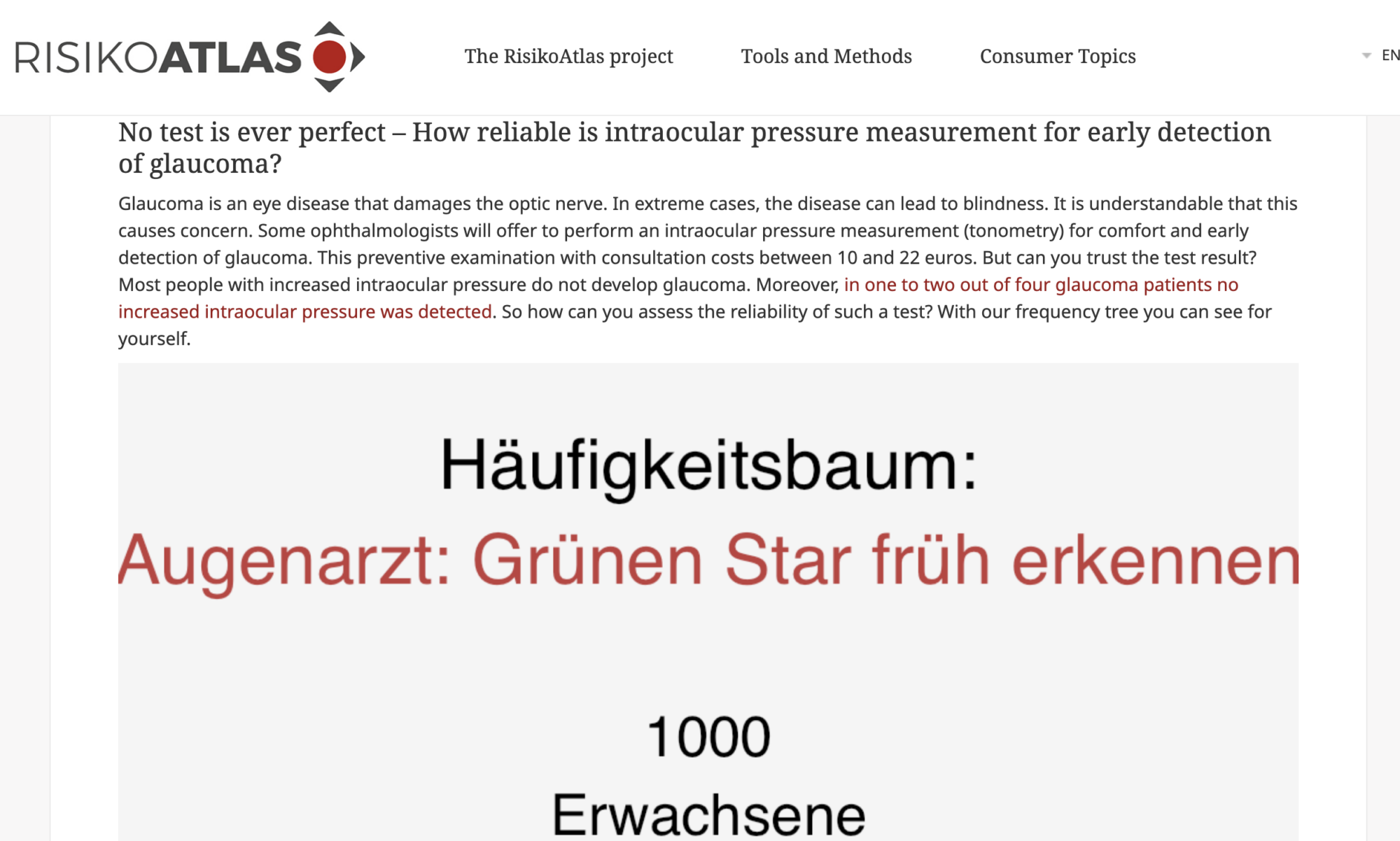
This natural frequency tree will guide you to assess to what extent we can trust this test results. Glaucoma is an eye disease that damages the optic nerve. In extreme cases, the disease can lead to blindness. Most people with increased intraocular pressure do not develop glaucoma. Moreover, in one to two out of four glaucoma patients no increased intraocular pressure was detected. So how can you assess the reliability of such a test? With our frequency tree you can see for yourself.
More Like This
View All ResourcesWhooping cough: time for a vaccine booster?
In this video, the Harding Center summarised the potential benefits and harms of the combined booster vaccination against whooping cough in adolescents and adults based…
Understanding flood forecasting
This podcast (time 9:00 – 11:10) explains how river levels are monitored, the difference between flood alert, flood warning and severe flood warning, and how…
Treatment strategies for heart attack risk
In this video, the Harding Center has summarised the potential benefits and harms of treatment strategies in the event of a heart attack or high…
Toolbox talks for construction safety
Risk Know-How has collaborated with Safetyknot, a UK-based training organisation that provides accessible, culturally appropriate safety and first-aid support, to produce ‘Toolbox talks: how to understand risks on building sites‘.
Your estimated risk of dying if you catch COVID-19
This visualisation was used as part of a study, and shown that presenting different ‘personas’ was useful to give context to the risk of dying…
Why Research Results are ‘Adjusted’ for Confounding Factors – and How To Communicate About It
In this video Prof. David Spiegelhalter you can learn about what researchers mean when they say they have ‘adjusted for’ factors like age, sex and…
Why do people fear the wrong things?
This video delves into the distinction between relative and absolute risk, offering insights into how we can improve our assessment of risk. It addresses a…
Wearing or not wearing a face mask for Covid-19?
This infographic demonstrates the effectiveness of different COVID protection methods.
Understanding odds ratios
In this video Prof. David Spiegelhalter explains odds ratios, a common type of relative risk in research, and will help you have a clear understanding…
Understanding hazard ratios
In this video Prof. David Spiegelhalter explains hazard ratios, a common type of relative risk in research, and will help you have a clear understanding…