
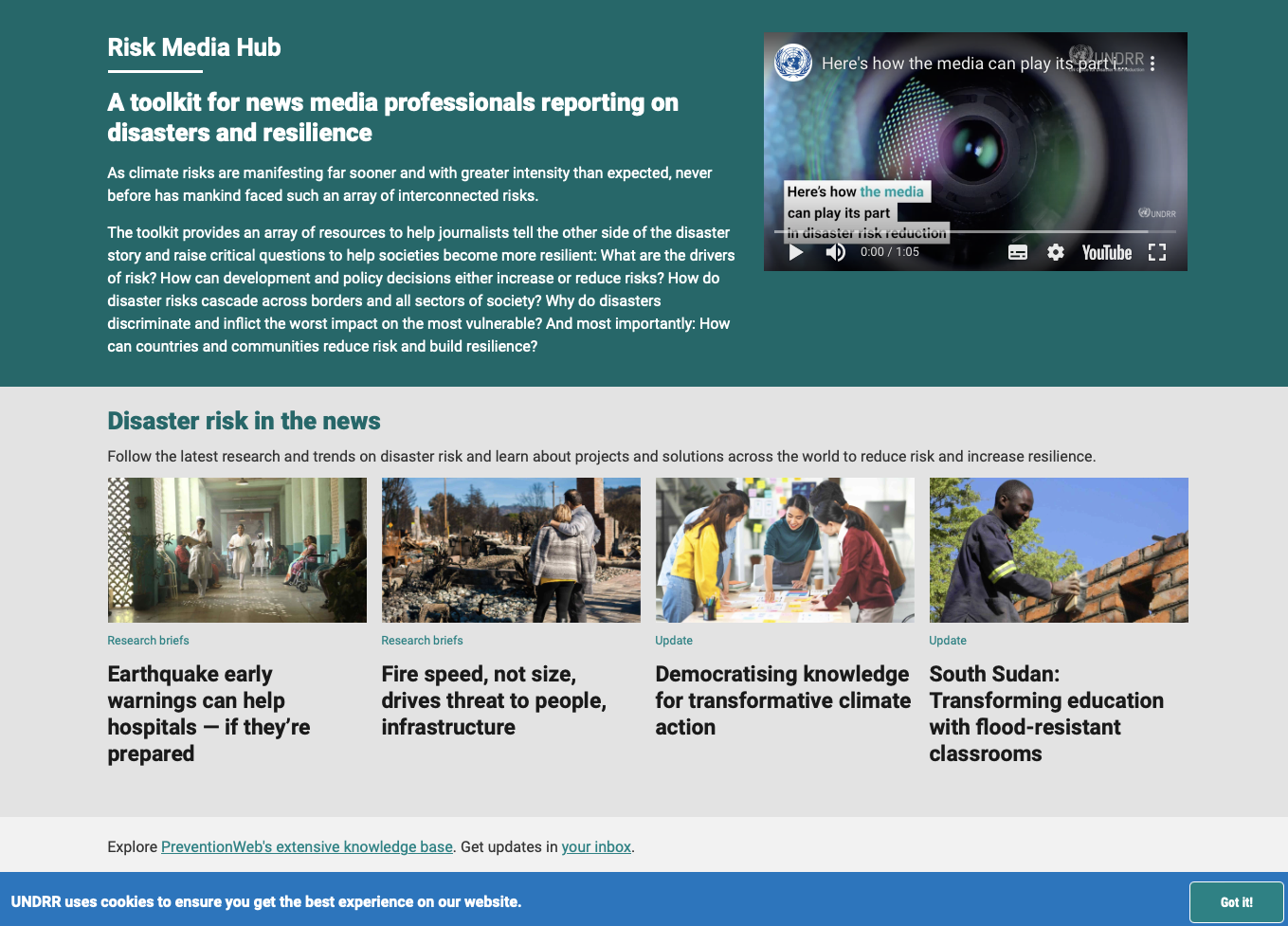
A toolkit for news media professionals reporting on disasters and resilience
The toolkit provides an array of resources to help journalists tell the other side of the disaster story and raise critical questions to help societies become more resilient: What are the drivers of risk? How can development and policy decisions either increase or reduce risks? How do disaster risks cascade across borders and all sectors of society? Why do disasters discriminate and inflict the worst impact on the most vulnerable? And most importantly: How can countries and communities reduce risk and build resilience?
More Like This
View All ResourcesToolbox talks for construction safety
Risk Know-How has collaborated with Safetyknot, a UK-based training organisation that provides accessible, culturally appropriate safety and first-aid support, to produce ‘Toolbox talks: how to understand risks on building sites‘.
Why Research Results are ‘Adjusted’ for Confounding Factors – and How To Communicate About It
In this video Prof. David Spiegelhalter you can learn about what researchers mean when they say they have ‘adjusted for’ factors like age, sex and…
Why do people fear the wrong things?
This video delves into the distinction between relative and absolute risk, offering insights into how we can improve our assessment of risk. It addresses a…
What you need to know about climate change
This series explains what you need to know about climate change and air pollution, food insecurity, oceans and much more.
What is marine debris?
This poster explains why marine debris represent a hazard for multiple sectors: animals, navigation, economy and more.
What does a 30% chance of rain mean?
In this video, Gerd Gigerenzer helps us understand what a 30% chance of rain actually means and talks about seeing and understanding risks around us.
What are garbage patches?
This fact sheet clarifies that garbage patches are not “islands of trash”; instead, they consist of microplastics continuously moving due to winds and currents. Garbage…
Understanding odds ratios
In this video Prof. David Spiegelhalter explains odds ratios, a common type of relative risk in research, and will help you have a clear understanding…
Understanding hazard ratios
In this video Prof. David Spiegelhalter explains hazard ratios, a common type of relative risk in research, and will help you have a clear understanding…
Understanding flood forecasting
This podcast (time 9:00 – 11:10) explains how river levels are monitored, the difference between flood alert, flood warning and severe flood warning, and how…