

Home | Framework | Think Beyond The Numbers | Quality of Evidence | How good is the quality of the evidence and can I rely on it?
Share:
Quality of Evidence

How good is the quality of the evidence and can I rely on it?

A mangrove forest was destroyed to build a resort hotel, backed by a study claiming that the wildlife would not be harmed. But who conducted the study and how?

Photo by Wesley Tingey on Unsplash. Unsplash licence. 

Politicians decided to support the destruction of mangroves to build up a resort hotel claiming a study found wild life wouldn’t be affected. When looking at the study:
The quality of evidence depends on the source, methods, potential biases of a study, and other aspects that should be considered before incorporating the information into decision-making.

Assessing the Evidence

Assessing the quality of evidence entails reviewing several aspects, including the credibility of the information source, the size of the sample, the methods used for data collection, the type of study, and the potential presence of biases, among others.
The use of Artificial Intelligence (AI) in decision-making is rapidly expanding, from identifying who may require surgery or to claims it could predict potential criminal behaviour. However, the reliability of these decisions hinges on the quality of the algorithms that power AI and the data behind it. Therefore, scrutinizing the quality of evidence is essential.

Useful Resources:

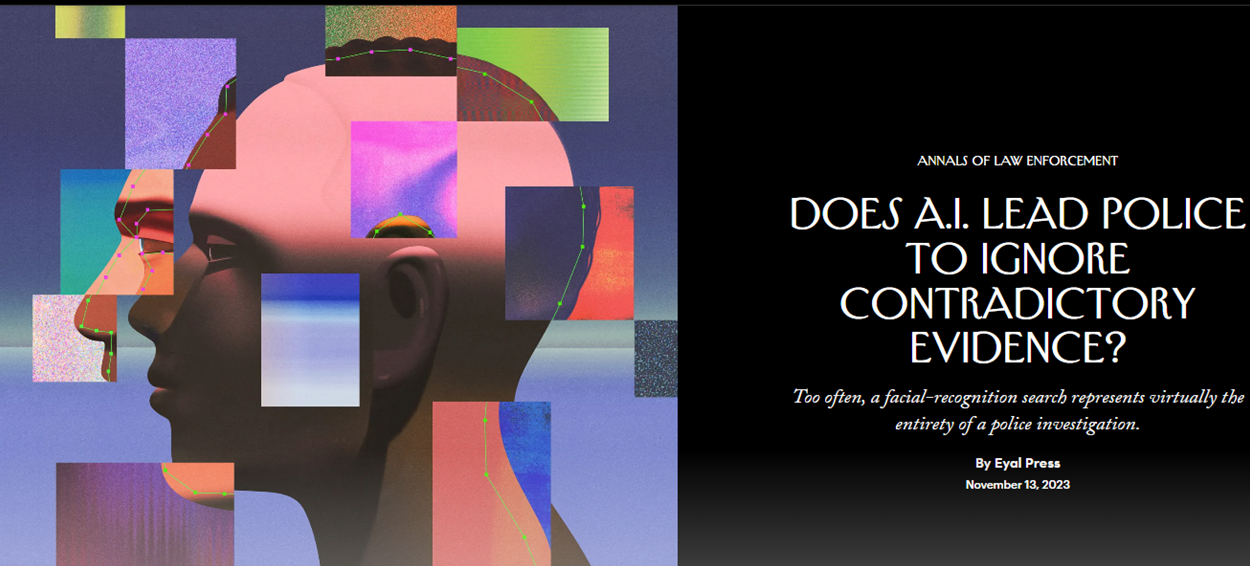
This Understand relative vs absolute risks showcases how facial recognition powered by AI can go wrong, with innocent individuals wrongly identified. Due to a higher amount of data available, AI tools are more accurate for Caucasian men; while people with darker skin, women, and older individuals face increased misidentification.

Listen to the episode ‘Access Denied’ of the BBC Radio 4 podcast ‘Uncharted’ by mathematician Hannah Fry, which recounts a situation where an algorithm was developed to proactively reach out to patients and schedule medical consultations before their conditions deteriorated into emergencies. However, due to an invisible flaw in data collection, the tool exhibited racial bias, with black patients receiving fewer calls than white patients.

These options may help you use our website more easily. For more information please check our accessibility statement.

  • Large text
  • Low contrast
  • Dark mode
  • Reduced motion