
Photo by Piret Ilver on Unsplash. Unsplash licence.
The regional government and utility companies want to build a nuclear power plant. Some community members think it will reduce pollution and provide energy. Others worry about accidents and the nuclear waste management.
Whether it’s building a nuclear plant or getting a vaccine, we need a full discussion of potential benefits and harms, and costs, so people can weigh up the trade-offs.
Balanced information
Balanced information requires sharing the potential benefits and potential harms involved in a decision so people can weigh the information and make their own decisions.
This balance may shift based on who is weighing up the benefits and harms. For instance, when evaluating whether fishermen should go fishing despite adverse weather conditions, the considerations and perspectives differ for local authorities compared to the fishermen.
Trade-offs are the things you win or loss in a decision, where gaining an advantage in one aspect means accepting a disadvantage in another. Making trade-offs involves weighing up the benefits, harms and costs of both taking action or taking no action. In certain situations, especially with medicines, there are clear numbers attached to the benefits and harms that can be compared and it is important to see appropriate comparisons. [See Be aware of comparisons and context]
False balance means presenting potential benefits or harms that are very different in magnitude as if they were the same.
People were worried about the AstraZeneca vaccine causing blood clots, so we wanted to offer some context for the numbers. We used an infographic from the Winton Centre showing the risks to different ages, and kept the information in the context of other side effect risks and risks from Covid-19 itself.
Rocio Perez Benavente, Maldita Ciencia, Spain
Useful Resources:
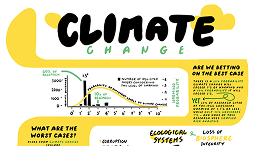
This graph was used in multiple media around the world to explain the benefits and harms of AstraZeneca Covid vaccination. Produced by the Winton Centre.