Risks posed by climate change are some of the most pervasive facing communities internationally. However, much of the information available fails to give communities what they need.
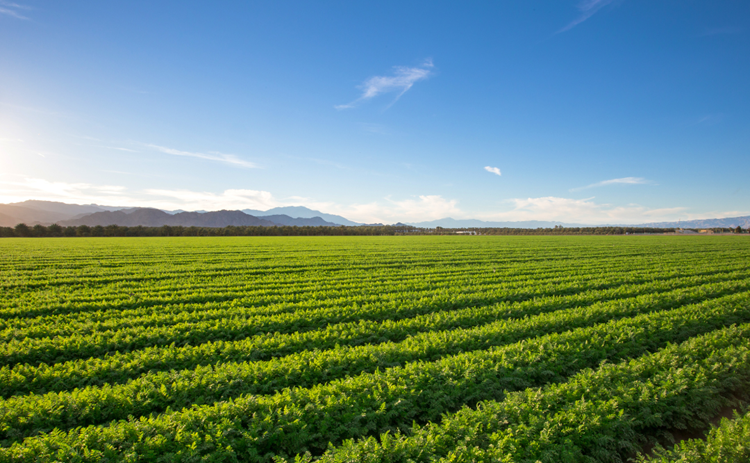
One group most at risk to the effects of climate change are farmers, as their livelihoods depend so much on seasonal predictability and suitability of the weather. We spoke to a group of farmers based in the UK about what they felt was missing from climate risk communication, as well as surveying online forums for discussions about the impacts of climate change. Whilst we heard a lot of stories about farmers noticing changes to weather patterns and the seasons becoming less predictable, one thing kept coming up as a point of confusion; why does a one, two or even three degrees change in temperature actually matter.
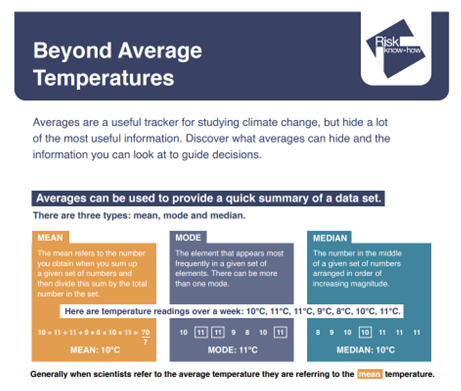
Much of this confusion stems from the fact that the change in the annual mean temperature gives no information on the actual impact of climate change. Our Risk Know-How Framework [link to framework] outlines concepts that can be used to probe big data, like annual temperature readings, to find information that is hidden by averages, most notably the range of the data, the spread, and outliers in the data. We used these concepts as a guide to curate a resource showing how we must go beyond the average temperature statistics to get a fuller understanding of the impacts of climate change.
The aim of the resource wasn’t to be a comprehensive account on the impacts of climate change or what farmers should watch out for. Rather, we wanted the resource to demonstrate how to find useful information relevant to your community beyond the usually communicated statistics. For example, we have all heard that UK temperatures are increasing, but it’s often missed out that the hot summer days are increasing twice as fast. This means the hot spells, which can be devastating to livestock, are getting more intense. However, this change in the outliers is completely hidden when we only talk about annual mean temperature increases. The resource shows how you can breakdown averages specific to your context, pointing the reader to further information if they want to know more.
Climate change has an immediate effect on my livelihood, but the information available often hides this impact. Talk of average temperature changes doesn’t give the information that people like me need. We need more resources that actually explain what changes in the climate mean in terms of impact to people.
Jim Mawle, Farmer
So many climate change risk communication efforts are ineffective because the information fails to meet the needs of its intended readers. For people whose job it is to study climate change, it can be easy to forget that the connection between temperature rise of one or two degrees and dramatic changes in weather patterns is not immediately evident. We need climate risk communication to recognise this and go beyond communicating averages.
It’s crucial to empower farmers and others affected by climate change with the skills to interpret data and find the information they want to allow these groups to be best prepared for the betterment of us all.
We’ve already seen significant impacts of climate extremes on UK food and farming including the 2022 heatwave which led to large numbers of premature poultry deaths, and more recently the wettest 18 months on record which flooded large areas of crop land in the UK. Climate change is projected to lead to increases in extreme events in future years, so it is critical that we build understanding of their impacts, which resources like this will help to do.
Dr Pete Falloon, Met Office