While the peace agreement in Colombia (2016) presents opportunity to improve citizens’ health, wealth and wellbeing, challenges to some communities remain. Two million Colombians (4% of the population) do not have access to electricity. Colombia has abundant water, yet it faces water security issues. Climate change is causing longer droughts and extreme weather events. Urban growth and industrialisation are putting additional stress on water resources. As a result, an estimated 1.4 million Colombians lack access to clean water.
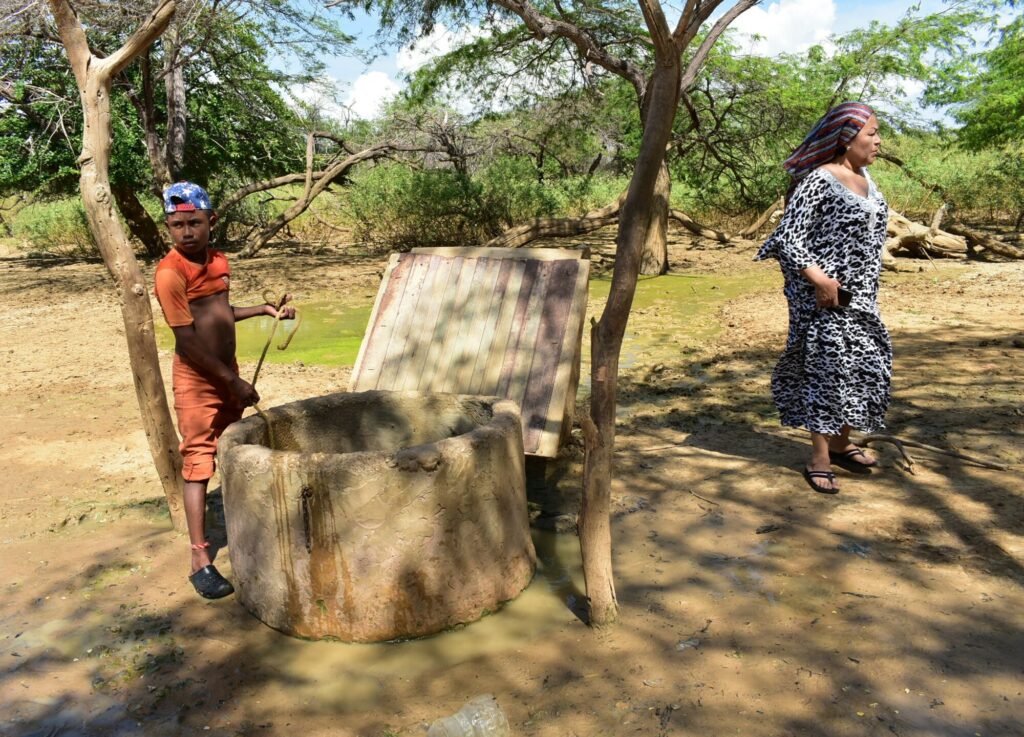
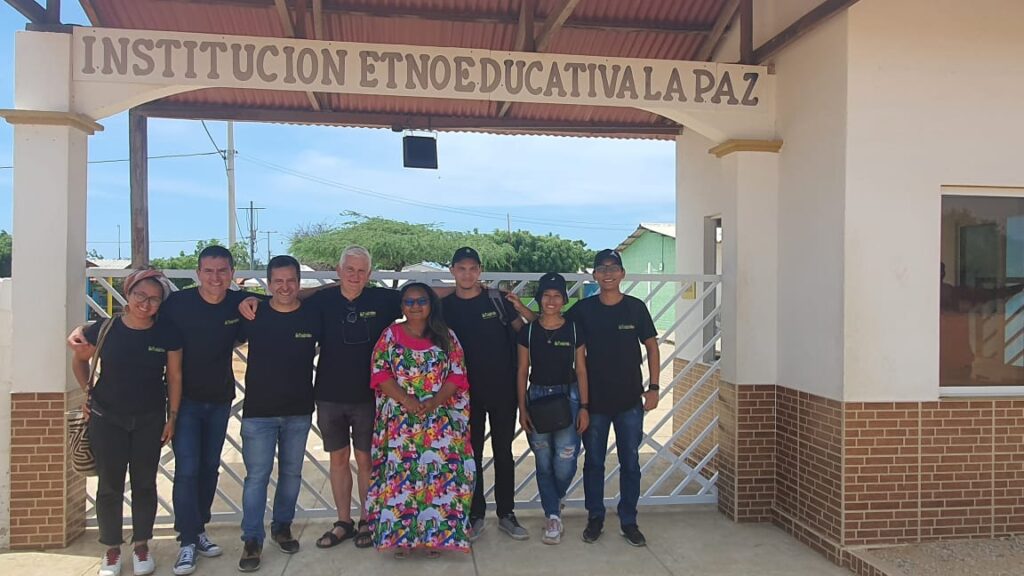
Earlier this year, the capital Bogota adopted a ‘zoned rationing’ strategy to save water. But water shortages also continue to severely affect some rural communities. Water insecurity, for example, has been linked with malnutrition and premature death in indigenous communities, such as the Wayuu in La Guajira County. In this region, the La Paz Rural Ethnoeducational Institution serves as a major community hub for the Wayuu. For approximately 600 children it provides their only access to clean drinking water. The community also faces issues with energy security and supply.
At the same time, La Guajira’s natural resources and location make it an ideal place to develop renewable energy. And the government’s National Hydrogen Road Map has identified the region as a prime spot for producing green hydrogen. La Guajira gets some of the country’s highest and most consistent levels of solar radiation and wind speeds. Its Caribbean Sea coast location provides easy access to shipping routes and export markets.
The region’s underdeveloped infrastructure and economic potential also mean that investments in green hydrogen and/or water projects can bring significant social and economic benefits to its people. These include developing skills and jobs in the community as well as securing access to water and energy supplies. All of which can help address social isolation and marginalisation.
Working with communities to understand risk
Balancing these economic, moral and social imperatives presents some challenges. Addressing these challenges starts with understanding how the local community feels. What are their perceptions of risk and confidence in water and energy solutions? How can their needs best be met? And how can this be done in a sustainable, culturally sensitive and ethical way?
In3, the Engineering Research Institute at the Universidad Cooperativa de Colombia is leading this work with the support of BERSTIC Network. It has developed a framework called CARED (Community, wAter-Renewable Energies, Diversity). A key component of this approach is to bring together all of the stakeholders in the projects. All of the people who will be involved delivering the projects, but also all of those who will affected by them. These include representatives of industry, academia, government, the communities, and the international cooperation.
Relationships are key to this process. Building trust and confidence among partners and sharing knowledge are essential for success. Also key, is recognising and valuing the ancestral expertise of the community. Information on risks, opportunities and problem solving do not just flow from the top down – from industry to the community, for example. Rather, this information and the learning flows in all directions. There is a coming together of science-technical knowledge and community knowledge. Solutions are developed with and for the people and as such have a greater chance of delivering positive change. The community becomes a ‘living lab’. Everyone works together to understand the challenges and co-create solutions.
Engagement with the Wayuu is now ongoing, but initially started with a series of visits to the community. Firstly, meeting with community leaders to assess the extent and nature of its energy and water challenges. Secondary meetings were then held with members of the wider community. This helped to get a better understanding of the cultural meanings of energy and water for the community. And to identify any potential risks to the delivery and uptake of new water and energy solutions. Among the risks uncovered in this process were:
- That water and energy have specific cultural meanings to the Wayuu. There are beliefs regarding wind, sun and water that have been informed by ancestors.
- That attempts to reorganise water and energy may be at risk if the community feels that its beliefs and concerns are not being considered.
- That the community’s previous experience of unsuccessful initiatives may risk undermining trust. For example, collecting water in some parts of the community is a gendered role. Previous attempts to improve access to water failed to take into account the impact on families and gender roles.
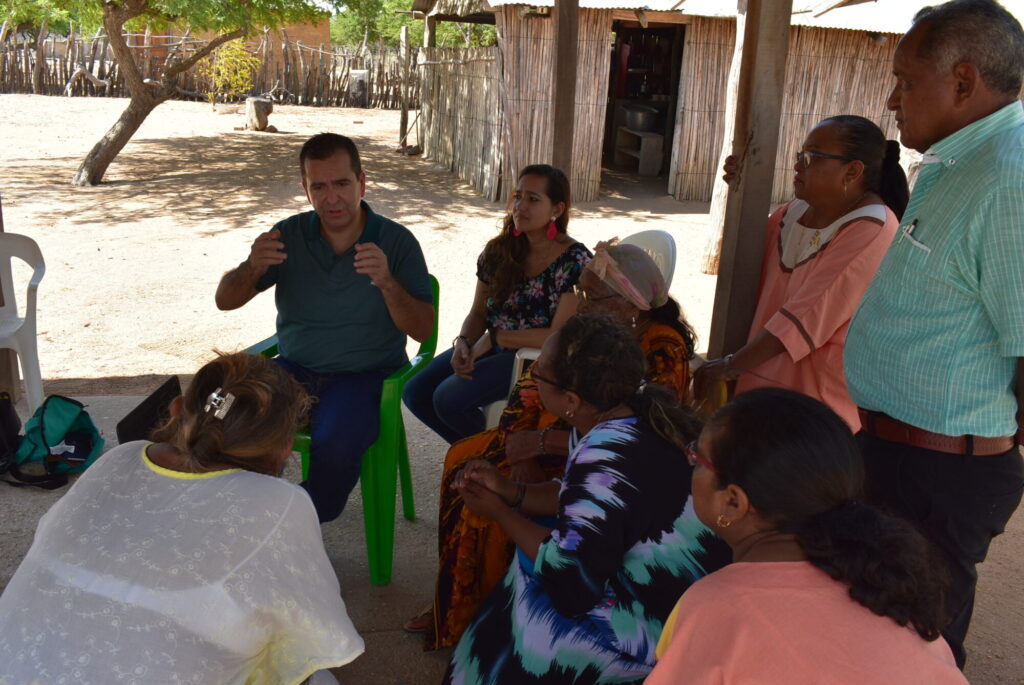
The greatest impact in empowering the Wayuu community to make decisions on risk related to energy and water came from inclusive, culturally sensitive consultations and co-design. The collaborative approach, which involved recognising the community’s ancestral knowledge and involving all stakeholders (government, industry, and academia), built trust and ensured solutions were aligned with the Wayuu’s needs. This process respected their beliefs around natural resources such as wind, sun, and water, while incorporating technological innovations, creating a stronger sense of ownership and participation in the solutions.
Professor Ramón Fernando Colmenares-Quintero, Director of the Engineering Research Institute at Universidad Cooperative de Colombia and BERSTIC Network.
Impact
This process of community consultation, respect and co-design has set up an agenda for the development of energy and water solutions in the region. Partnerships are crucial to driving this agenda forward and include national and international companies such as Las Empresas Públicas de Medellín E.S.P. (EPM), Aquatera and Innova Solar Colombia (part of Innova Capital Partners).
Informed by the work on community engagement, the agenda is highly innovative in its approach. For example, an initiative to install solar panels to drive desalination units, not connected to the national grid, is using crowd funding. Sensors are being used to remotely monitor solar panels and water quality. Solutions are being aided by new technologies and AI. A system of ‘digital twins’ – connecting engineers and researcher with people on the ground via mixed and extended reality – is using the metaverse to connect expertise with the community, breakdown language and cultural, and upskill communities in a secure environment.
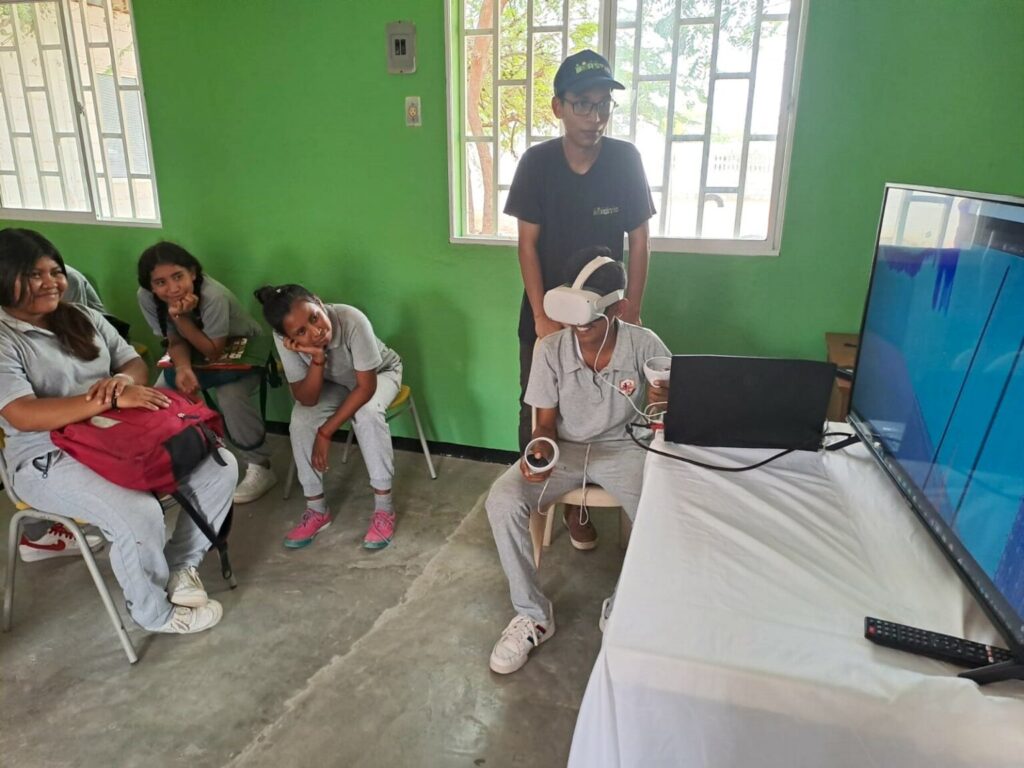
The key takeaway message that resonated with the Wayuu community was the importance of co-designing solutions that respect and integrate their cultural beliefs and ancestral knowledge about natural resources. This understanding—that solutions must be built with the community, not imposed on them—helped ensure that any new energy and water initiatives would be sustainable and accepted, ultimately empowering the community to manage risks more effectively.
Professor Ramón Fernando Colmenares-Quintero, Director of the Engineering Research Institute at Universidad Cooperative de Colombia and BERSTIC Network.