Background
Kenya’s construction sector currently has serious safety risks. It sees about 64 worker deaths per 100,000 each year. This rate is much higher than in other African countries, such as South Africa (which has 25 per 100,000) / year). It’s also far above fatality rates in European countries, such as the UK. (less than 1 per 100,000 / year).
A key risk factor is the unskilled nature of Kenya’s construction workforce. It contributes to the poor fatality statistics. Over 90% of the 240,000 employees lack safety certifications and training. Accredited professionals, including architects, surveyors, planners, and engineers, account for less than 2% of the sector, approximately 4,000 workers. There is a lot of innovation in the construction sector, with the use of new technologies, approaches and materials. The skills capacity of the sector has not necessarily kept pace with this innovation.
At the same time, the sector is booming. The workforce has grown more than 130% in the past decade, with government initiatives to improve infrastructure and housing, in part, driving this growth. Informal settlements where much of the current construction is taking place also present additional hazards.
The challenge
One way to improve safety within the sector is to increase the skill base of its workforce. But there is much to do; a sector-wide shift in safety culture is needed. There is, however, limited resource to support this change. And there is an imperative to act quickly given the sector’s recent growth and poor safety record.
Responding to these sector challenges, projects such as the Safety Champions in Engineering Education (SCEE) are enhancing the knowledge and skills of construction industry workers. It has two areas of focus.
- The training of trainers (ToT). Equipping professionals to become ambassadors of safety within their workplaces.
- Identifying and training early career construction professionals and recent graduates. Enhancing their awareness of safety and improving their skills through intensive 10 to 12 week internships.
Both these approaches aim to cascade knowledge and expertise through the sector to develop a positive safety culture. From planning and design through to on-site, community level practices. By training professionals to become champions of safety. Emphasising the need to embed safety in all parts of project design and management. Ensuring professionals’ knowledge is up-to-date and they are aware of emerging safety risks and challenges. Empowering trainers and professionals to communicate safety messages to others and to become safety leaders.
Changing the safety culture requires working with many different partners including industry, government and academia. So far, 18 trainers have gone through the ToT programme. It has created a pool of experts who can share learning more widely. This pool of experts includes influential representatives from the regulation and construction sectors. Many of those coming through the course now hold training and safety roles within their organisations. In addition, 12 early career professionals/graduates have completed the safety internships. But safety also needs to be embedded in professionals’ career development.
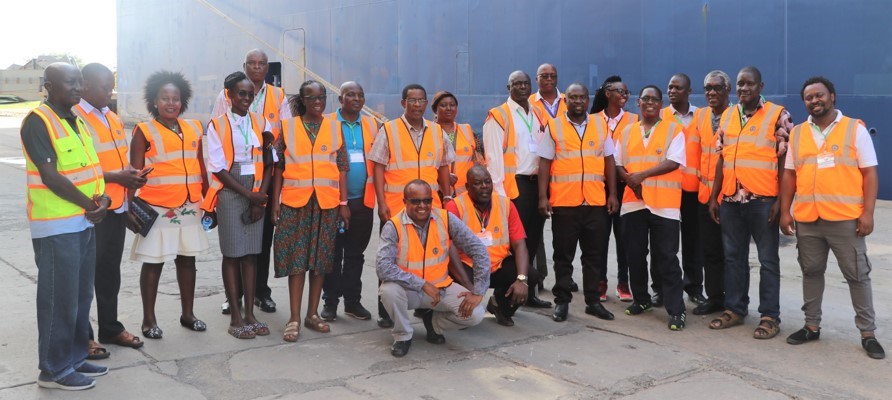
Communicating risk on site
Communicating safety risk at construction-site level is also a challenge. But the ToT programme and other initiatives that empower professionals to be better teachers of safety, are making a difference. Identifying key people, such as site managers, is also important. Using them to communicate messages on safety to the workers which can also help address potential cultural and language barriers.
Innovative teaching and communication methods are also in development. These include ‘gamifying’ safety training. This helps make it more accessible; particularly to those with limited literacy.
Impact
While improving the safety culture will take time, there are some early signs of impact. ‘Graduates’ of the courses and internships have been able to secure work in other sectors such as aviation and maritime. This potentially expands the reach of effective risk management and safety best practice beyond the construction sector. Safety is increasingly being included into university courses. In Kenya, six universities have now have safety as a core component of their courses.
The safety short course training and outreach programs had the greatest impact on participants through knowledge empowerment on safety risks in construction, leading to behavioural change / shift in mindset around safety risk e.g. use of PPEs.
One strong message that was taken up and appreciated by the stakeholders in the construction industry including the community was that: “Safety is a responsibility of all duty holders in a construction project (Professionals, contractors, project owner and community) and that safety should be integrated at all stages of a construction project rather than being considered as a separate element“.