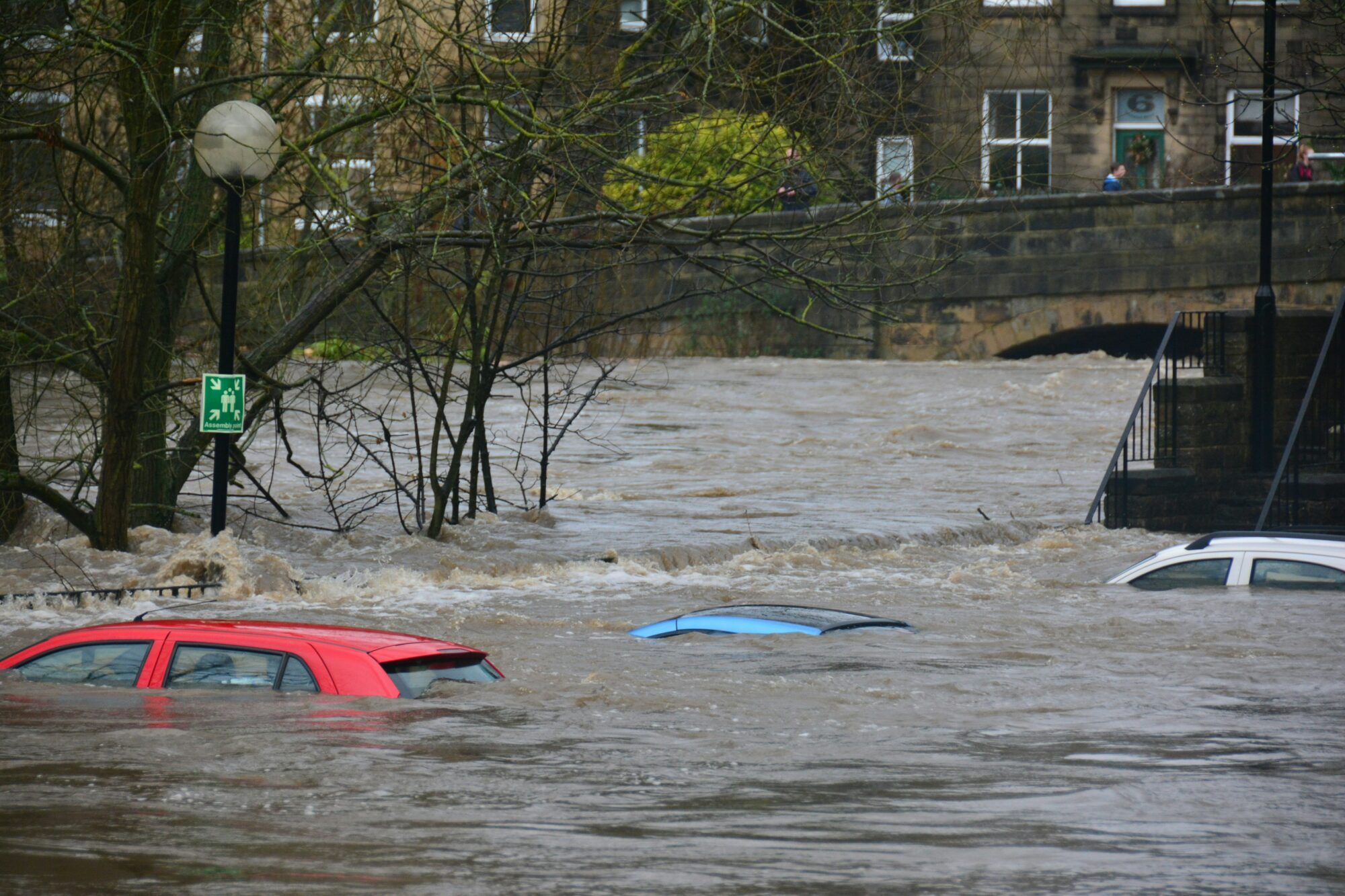
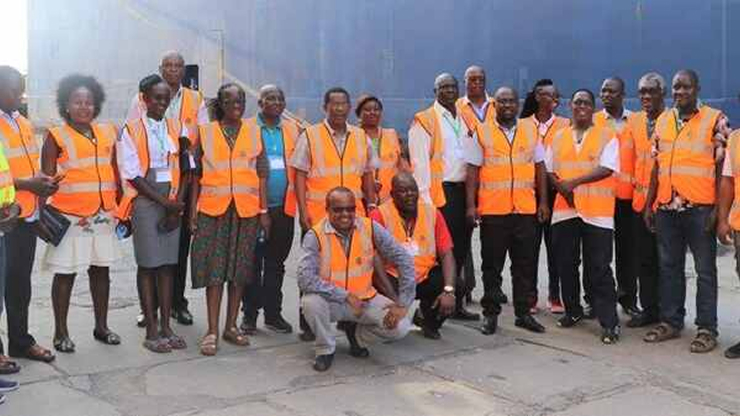
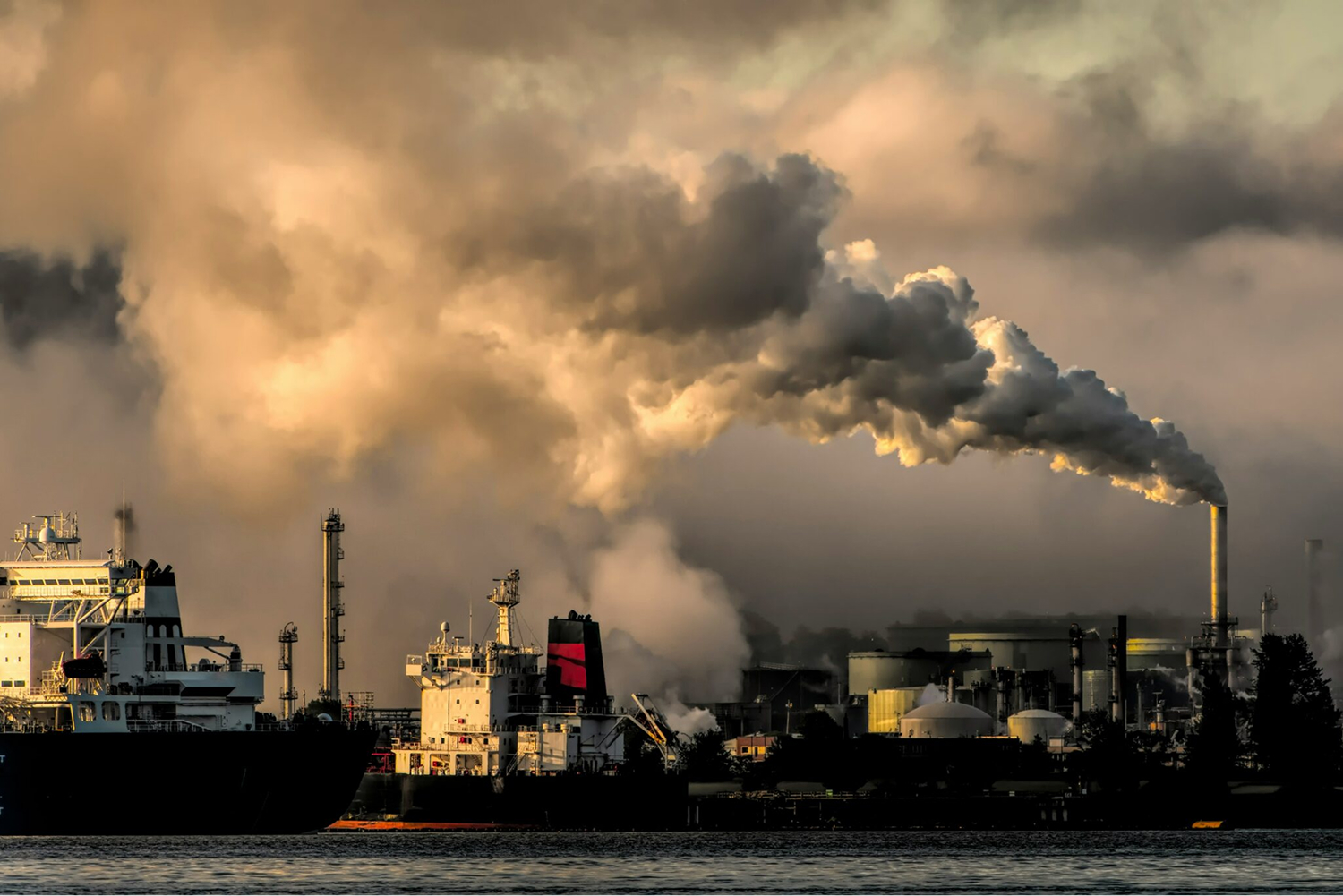
The shipping industry will change dramatically as the sector decarbonises and moves away from fossil-based fuels shown in the image bellow. Several alternative fuels (including hydrogen, methanol, ammonia and others) are under consideration for use on ocean-going vessels. Across the shipping industry studies and investigations are underway to assess the pros and cons of these fuels.
This case study describes how a detailed technical study into the safety of ammonia as a shipping fuel was made accessible and valuable to non-technical stakeholders such as businesspeople and policymakers.
The challenge
One challenge faced by the Hub is to ensure our work is properly understood so stakeholders make decisions based on meaningful evidence. In the case of ammonia as a fuel there are a range of risks of varying severity and a range of mitigations and associated costs. There is no single or simple solution.
Our approach
Visualising the reduction in risk from different measures
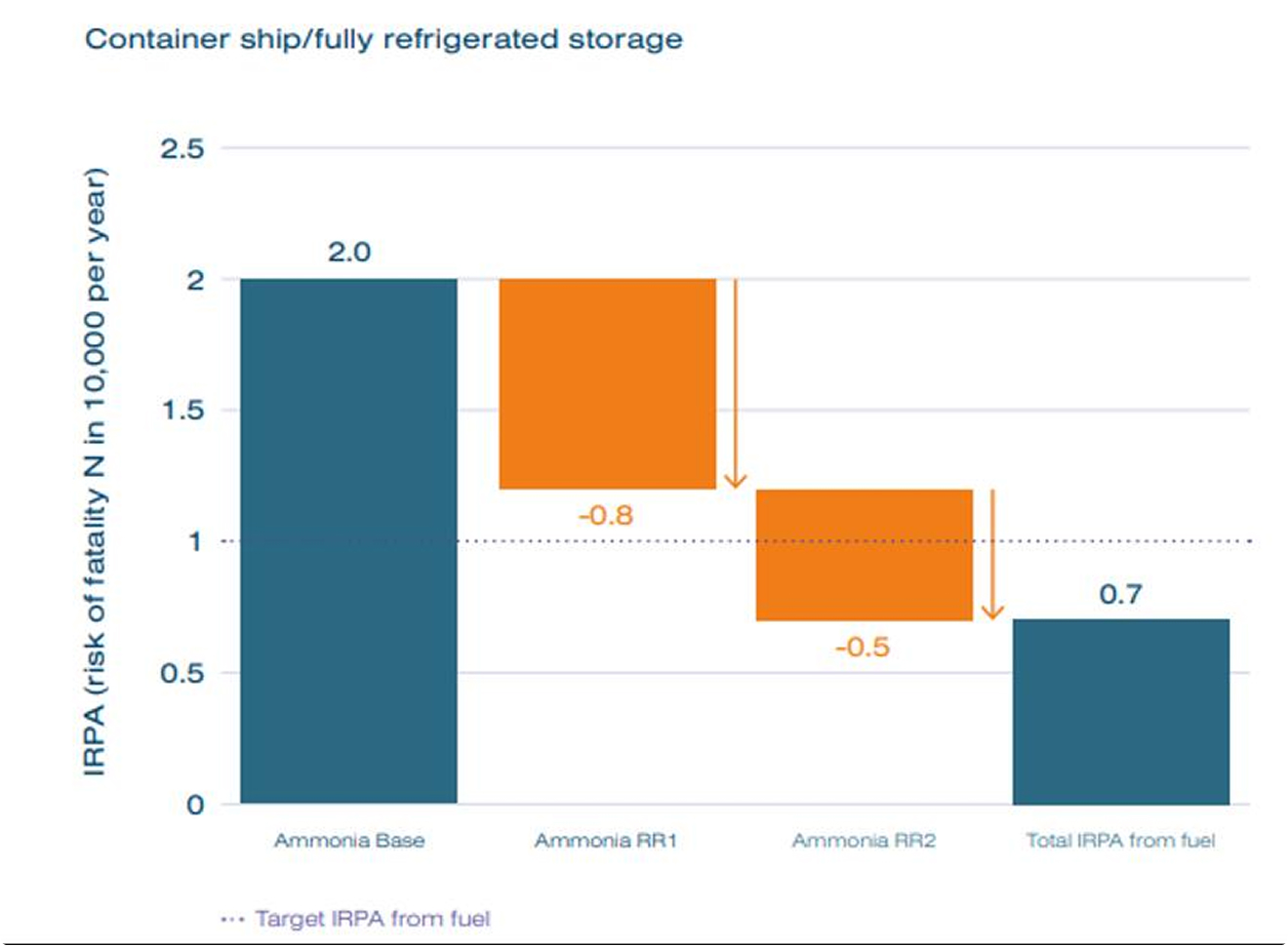
This applies to a containership design with fully refrigerated fuel storage. For other types of ship and fuel storage systems, different combinations of risk reduction measures were required to achieve target.
Limitations
There are also limitations to the work. We did look at the risks from fossil-based fuel on the same basis, but we did not compare with other alternative fuels. We do not compare the risk to ship’s crews of a hazardous fuel with the do-nothing risk of catastrophic climate change to all of humanity. Neither do we quantify the trade-offs between the safety of people and the safety of the environment.