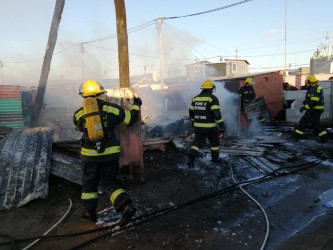
Fires in informal settlements pose a significant problem in South Africa. These areas, often overcrowded and poorly constructed, house many vulnerable people. Fire in these communities can spread rapidly. The density of the housing and lack of maintained infrastructure (roads, fire hydrants, etc.) also make access difficult for firefighters attending the scene of a fire, who risk their lives on a regular basis to fight these fires. Deaths and injuries from domestic fires are much greater in informal settlements with death rates around 4-5 times higher than areas of formal housing. Individual fires, of which there at least 15 to 30 recorded fires per day in informal settlements nationally, can destroy hundreds of homes and displace thousands of people. Assessing the true impact, however, can be difficult. Additionally, the social cost is high. Fire victims in these informal settlements can often lose all their belongings or be injured for life.
There is no quick fix for informal settlement fire safety – we are treating symptoms of a lack of housing. There will always be fires. However, the question is how many people and houses we can try save with an imperfect response.
Professor Richard Walls, Head of the Fire Engineering Research Unit at Stellenbosch University
Helping the community understand fire risk
Fire safety in informal settlements is a complex issue. No single authority has responsibility for fire safety and for reducing the risk of fire in the informal settlements. This can result in an uncoordinated or incomplete responses. Residents can play a key role, but they are not always aware of what they can do and how their decisions can affect fire risk. For example, the materials they use to build their homes.
Unlike ‘formal’ neighbourhoods, informal settlements are not subject to fire codes. Tackling fire risk and prevention relies on cooperation between the communities and various organisations. Professionals can share information with residents but have no legal powers. They cannot, for example, force residents to change the building materials used in their homes.
Some grassroots initiatives have been successful. A multi-agency project, for example, supplied homes with smoke detectors. This had a positive impact, and some residents said that detectors had saved lives. But residents and professionals still have more to do. Some of the smoke detectors did not work well in homes that had sooty domestic fires, were unreliable and could go off by mistake. Residents sometimes took the batteries from their smoke detectors. They used them to power other devices in their homes. Listening to the communities and understanding their experiences will help improve future work and remove potential barriers to uptake.
Risk perception within communities does not always match the risk factors
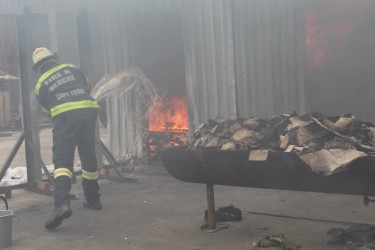
Residents, for example, can use cheap, but highly flammable materials such as paper, polyurethane foam and plastic sheeting to insulate their homes. Some work has been done to raise awareness among residents of the risks associated with this. As an example of an alternative, residents could use cement-stabilised mud as an affordable, fire-resistant alternative. Existing awareness campaigns, however, can struggle to reach all households in the vast number of diverse, scattered settlements. Many of the residents in these informal settlements are in survival mode having to deal with daily challenges of providing food and shelter for their families. With limited resources, fire safety is often low on their list of priorities.
Guidelines have been developed outlining a range of potential interventions to reduce fire risk. These include raising awareness about the hazards associated with poor electrical connections and electrical goods, old, flammable building materials, lack of fire escape routes. But these guidelines acknowledge that there is no one-size-fits-all approach. All those working in informal settlements recognise the need for collective approaches to work with and within communities to recognise their specific needs.
Equipping communities to deal with future risks
At a community level, improved layouts could increase separation between housing, but there is a great deal of pressure on the land. Reblocking projects are taking place in informal settlements which rearrange housing structures into more organised blocks with firebreaks. These are, however, resource-intensive, complex to implement on a large scale and rely on considerable support from NGOs.
The topic is quite relevant for the type of work we do [heat stress] … Reminders about drinking water, taking small breaks, and noticing signs like dizziness or heavy sweating are practical and relatable… I also liked the example comparing the same job being done in the morning versus in the strong sun later in the day. This makes it easier for workers to understand how the same task can become risky depending on the conditions.
AC Technician, Nepal
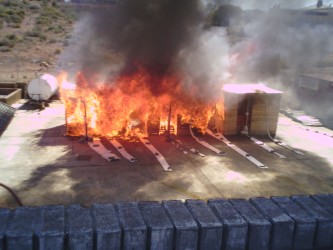
However, the primary drivers of informal settlement formation – a shortage of affordable housing and population growth – remain. And with them so too do the elevated risks of fire in these settlements. Overall, while innovative technical solutions and local improvements have potential to reduce fire impact, a lack of formal housing supply means the underlying issues cannot be solved quickly or easily. What is clear, however, is that ongoing work to inform communities and help mitigate fire risk is essential if we are to reduce the considerable harms fires are causing in these places. Bridging the gaps between research evidence, on-the-ground application and changing high-level policy remain substantial obstacles. Continued efforts are needed across many areas to effectively manage this risk to vulnerable communities, but that these interventions need to be approved and tested at a community and fire prevention level.